
Are you looking for a new business analyst job or your first business analyst job? Are you worried about getting hired for the right type of position? Or perhaps you are wondering why your job search is taking longer than it seems like it should be?
Let’s look at what you can expect from your business analyst job search, figure out where you are in the process, and decide what steps will get you hired.
Step 1 – Position Yourself to Get Hired as a BA
The first step in the job search process is to figure out what kinds of business analyst jobs you are qualified for and how to position your skills and career experiences for those types of jobs. After all, if you don’t know what BA qualifications you have, how can you decide what BA jobs to apply for?
The good news is that you probably have a lot more BA experience than you think and so are qualified for a broader set of business analyst roles than they you are currently considering.
Finding your transferable business analyst skills ensures that you have more career options and job opportunities. It also makes updating your resume and preparing for job interviews a lot easier, so that’s a nice bonus.
For an in-depth coverage of transferable business analyst skills, be sure to check out Laura’s best-selling book How to Start a Business Analyst Career.
Step 2 – Put Together a Resume that Highlights Your Business Analyst Skills
You can be well-qualified for a particular type of role, but if your resume doesn’t showcase those qualifications, you will not get a call back. Recruiters don’t read between the lines and they never make assumptions in your favor.
Your business analyst resume needs to spell out exactly what you are qualified to do and be structured in such a way that it doesn’t make your recruiter guess.
It also needs to look like a resume that’s relevant to a business analyst job, which means it’s not laden with too much technology jargon or management-level accomplishments (without the detail to back them up). Your resume needs to clearly demonstrate that you can (and have) contributed to past projects in a business analysis role (even if you’ve never held the business analyst job title).
Step 3 – Apply to BA Jobs
With an understanding of your key business analyst skills and a resume that highlights your skills and experience, you are ready to apply to business analyst jobs. With your skills assessment in hand, you’ll be able to focus on the jobs that are a relatively close match to your skill set. If you’ve been applying to hundreds of jobs and not hearing back, this tactical change could increase the proportion of opportunities you hear back from significantly.
A “relatively close match” means that you find evidence of at least 80% of the skills from the job posting in your resume. This percentage gives you some room to stretch beyond your qualifications and also the chance to be in the right place at the right time, should a particular employer lighten up on their laundry list of qualifications, such as for specific technical skills or industry expertise.
Three rules of thumb are particularly important when applying to jobs:
- Since the person reviewing your resume may not understand business analysis as well as you do (especially once you’ve gone through a skills discovery process), you’ll want to be careful with terminology. You know that “process flows” and “workflow diagrams” can be used interchangeably and that “use cases” are a type of “functional requirements”, but does your reviewer? Tweaking terms can help get you to the 80% match.
- As you match up qualifications, you will probably discover that you have other relevant skills that aren’t yet incorporated into your resume. There is nothing wrong with customizing your resume specifically for this position to highlight relevant skills. And if that new skill comes up again and again, it probably makes sense to add it to your main resume.
- Even with a good match, you may not hear back from a job application. This can happen for reasons that have nothing to do with your qualifications, such as the job being filled before you apply or the job requirements changing. It could also mean that one of the qualifications you didn’t provide evidence against was a critical one as so the recruiter decided you weren’t a good fit for the position.
This step in the process can be emotionally trying. It involves a lot of iterating on your resume, defining of your skill set, and persistence. A strong professional network can really help accelerate your job search even further as you are more likely to hear back about an opportunity when you can secure a personal recommendation or introduction.
Step 4 – Interview for the Job with Confidence
If you are focusing on the right business analyst jobs, you will start to hear back about opportunities and get asked to interview for the job. Before getting an offer, you can expect to interview with multiple people. Often a recruiter will do a first pass phone interview and then you might meet with several people from the hiring organization including the hiring manager.
You can expect to be asked a series of open-ended behavioral interview questions related to the job qualifications. And even if they aren’t listed, soft skills are almost always considered to be very important, so preparing to speak to how you handle challenging stakeholders, tight deadlines, and complex problems is a good idea.
A little bit of confidence goes a long way in doing well during the interview and ensuring you honestly and thoroughly communicate your qualifications for the position. And a little bit of preparation and practice goes a long way in building up your confidence.
Step 5 – Make an Informed Decision about the Offer
Once you make it through the job interview process and receive a job offer, you’ll have a decision to make.
- Do the terms of the offer (including salary and benefits) work for you?
- Will you be happy working in the environment?
- Is this a step forward in your career?
Thinking forward to an eventual job offer can help ensure you ask the right questions during the job interview process itself.
Find Your Place in the Process
If you are looking for a new business analyst job, consider where you are at in this job search process and starting working forward towards the next step.
If you’ve been searching for awhile and aren’t seeing much traction, start from the beginning. I find that many people skip steps 1 and 2 and then get frustrated when they don’t hear back from jobs in step 3. This is often because they aren’t fully communicating their relevant skills and experience in their resume.
Get the Book
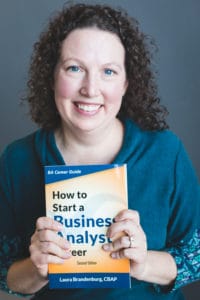 In How to Start a Business Analyst Career, you’ll learn how to assess and expand your business analysis skills and experience.
This book will help you find your best path forward into a business analyst career. More than that, you will know exactly what to do next to expand your business analysis opportunities.
Click here to learn more about How to Start a Business Analyst Career
