
2025 was a year of shorter, high-impact videos – all specifically for business analysts of course!
My goal was to continue to go for depth, just in shorter increments. I started with a series of tips from my new book – The Value-Driven Business Analyst – and then started answering your questions and addressing challenges I was seeing in our community.
What did you think of the change? Please reach out and let me know.
#10 – Stop Reinventing Your Business Analysis Approach on Every Project
While every project is different, reinventing your approach every time only leads to confusion, reactivity, and burnout. Explore how following a flexible framework brings clarity, consistency, and long-term success…even in fast-moving, diverse environments.
📌 FAQs
Question: If every project is unique, why use a structured business analysis process?
Answer: A flexible framework helps you adapt without starting from scratch. It gives you a foundation to build from, so you’re proactive instead of reactive…and focused on what the business truly needs, not just what’s urgent.
Question: Won’t using a process make me rigid or too formal?
Answer: Not at all. The most successful BAs flex their process intuitively. A strong structure gives you freedom because you always know what step to take next, and how to adjust it for your project context.
Question: What process does The Value-Driven Business Analyst teach?
Answer: Laura teaches an eight-step business analysis process refined across industries and methodologies. It includes deep dives into business process analysis, software / functional requirements, and data modeling and it’s designed to scale with your career.
#9 – Overwhelmed at the Start of a Project? Watch This
Explore why overwhelm can be a positive sign and discover one practical, value-focused tip to break through the fog and start leading with confidence.
📌 FAQs
Question: Why is feeling overwhelmed at the start of a project actually a good thing?
Answer: Overwhelm often means you’re absorbing critical context and raw information needed to drive meaningful change. It’s a natural part of early-stage analysis where ambiguity is high.
Question: How do I avoid getting stuck in analysis paralysis?
Answer: Instead of trying to solve everything at once, focus on identifying just the next decision your team needs to make. This creates momentum and keeps your analysis grounded in immediate value.
Question: What if stakeholders resist taking a step back to define business objectives?
Answer: Reframe the conversation by connecting the objective-setting work to a tangible outcome, like choosing the right system. This positions your analysis as enabling faster, smarter decisions, not slowing things down.

#7 – Scoping an AI Project: Don’t Miss This Step
Explore how to strategically evaluate generative AI as a solution option during the scoping phase and the key questions every business analyst should be asking to unlock its real business value.
📌 FAQs
Question: Why should business analysts consider AI during project scoping?
Answer: Generative AI isn’t just a trend, it’s a new category of solution that can enhance communication, summarization, simulation, and decision support. Business analysts are uniquely equipped to evaluate whether it’s the right fit for a business need.
Question: What types of questions should I ask when scoping an AI-driven solution?
Answer: Start with core questions like: What problem are we solving? What data do we have? Where can AI be trusted, and where is human review still needed? These help you align the solution to business goals while managing risk and feasibility.
Question: When is traditional software still the better choice?
Answer: Rule-driven, structured processes are often best served by traditional programming. AI shines in creative, iterative, or variable tasks, like drafting content or generating concepts, not rigid workflows.
#6 – Scope Creep Starts Small – Here’s How to Stop It
Discover how minor changes can quietly derail a project and how value-driven business analysts reframe the conversation to stay focused, deliver results, and avoid unnecessary complexity.
📌 FAQs
Question: Why is scope creep such a big issue if the changes seem small?
Answer: Small additions often create ripple effects—more testing, more complexity, more documentation—adding friction without delivering real value. Over time, these seemingly minor changes can overwhelm the project.
Question: How can business analysts prevent scope creep?
Answer: Shift the conversation from “Can we add this?” to “What will it cost?” and “Is it worth it?” Use strategic questioning to evaluate impact, trade-offs, and alignment with business objectives before saying yes.
Question: What should I ask when assessing a scope change?
Answer: Ask questions like: Does this support our core objectives? How often will it be used? Are there workarounds? What will we de-prioritize to make space? These help surface hidden costs and keep the project focused.
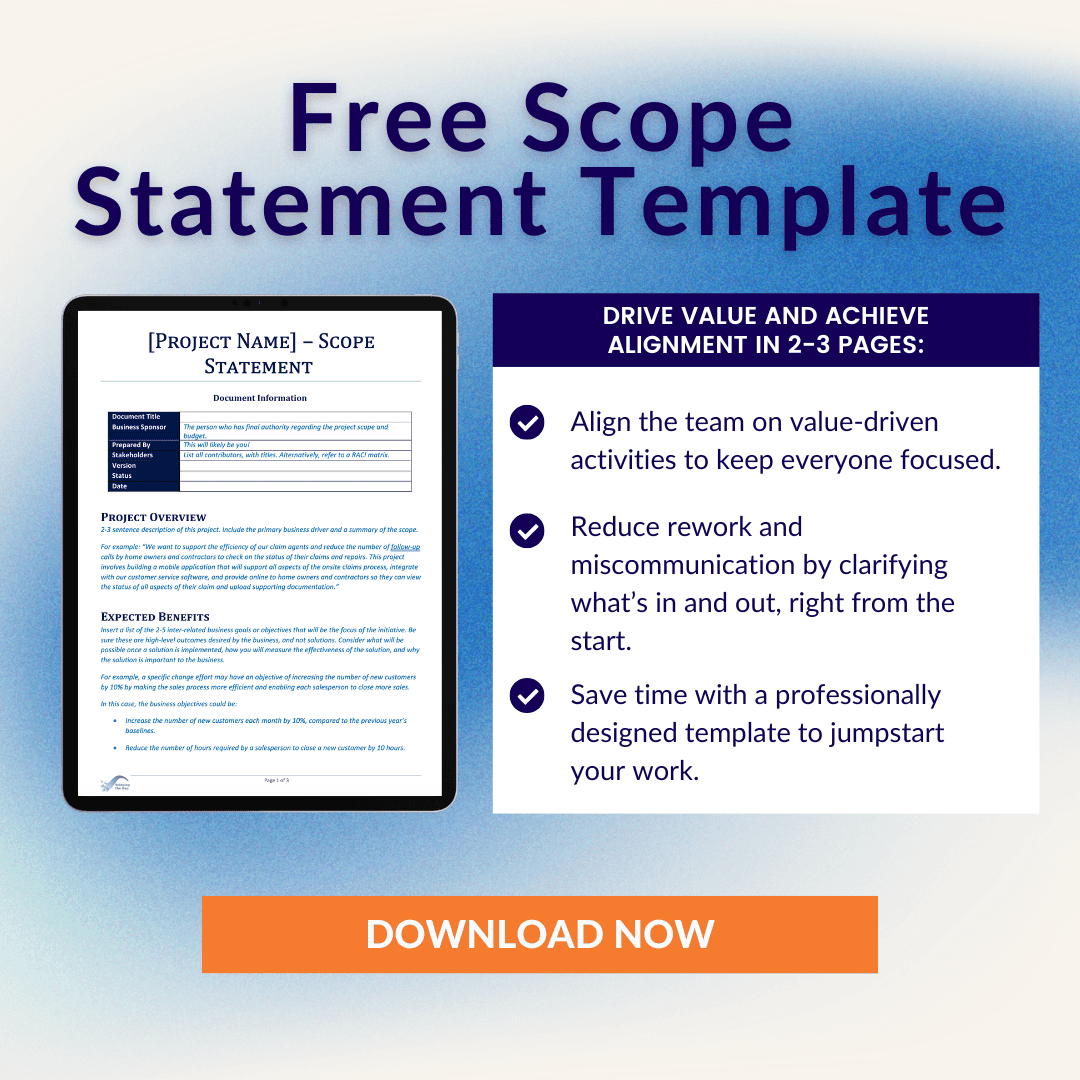
#5 – Agile is NOT a Business Analysis Process
Agile may guide how software is delivered, but it doesn’t replace the structured analysis business analysts bring. Explore why the business analyst role is more critical than ever…and how to move beyond “just writing user stories.”
📌 FAQs
Question: Isn’t agile already a process that includes business analysis?
Answer: Agile is a delivery framework—it tells teams how to deliver software, but it doesn’t provide a process for discovering business needs, analyzing processes, or aligning stakeholders. That’s where agile business analysis comes in.
Question: Why do business analysts often feel reduced to “just writing user stories” on agile teams?
Answer: When analysis activities aren’t clearly defined, BAs default to story writing. But without upfront work like clarifying objectives and evaluating options, agile teams risk delivering software that doesn’t meet real business needs.
Question: How can business analysts create more value in agile environments?
Answer: Use a value-driven process to guide your work before, during, and between sprints. This ensures you’re not just keeping pace with Agile: you’re enhancing its impact by making sure the right problems are being solved.
#4 – Great Requirements Start with Great Questions
Clear, actionable requirements don’t come from guesswork. They emerge from smart questions and structured analysis. Explore how value-driven business analysts build credibility by asking what others overlook.
📌 FAQs
Question: Why are great questions so important when defining requirements?
Answer: The right question can reveal hidden gaps and spark clarity. It builds trust and credibility, often making the difference between requirements that drive value and those that miss the mark.
Question: Where do those great questions come from?
Answer: They come from analysis. By using tools like requirements questionnaires, business process maps, and data models, you develop insights that help surface the questions no one else is asking.
Question: What techniques help uncover hidden or vague requirements?
Answer: Techniques like use cases, process models, data maps, and structured working meetings give you multiple perspectives on the same requirement…helping you dig deeper and build stakeholder buy-in.
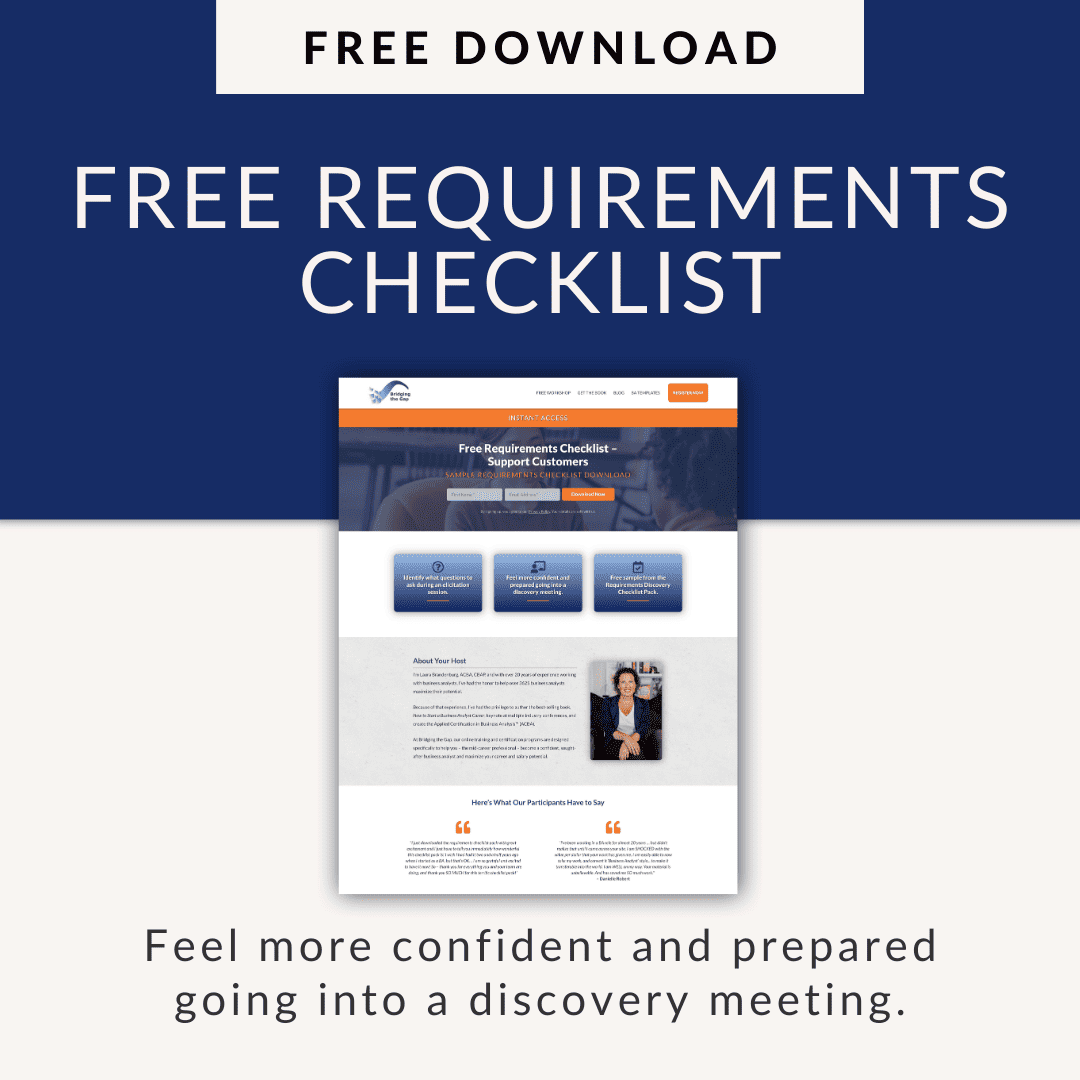
#3 – The #1 Reason Business Analysts Don’t Get Recognition
If your work as a business analyst feels overlooked, the issue may not be your effort. It may be that the value of business analysis isn’t clearly understood. Explore how to shift that narrative and build recognition through structured, value-driven work.
📌 FAQs
Question: Why do so many business analysts feel unrecognized or undervalued?
Answer: Often, the value of business analysis isn’t clearly articulated, even by those doing the work. Without a shared understanding, BAs can be sidelined, underutilized, or buried in task work that hides their true contribution.
Question: How can I better explain the value I bring as a business analyst?
Answer: When you follow a structured, value-driven business analysis process, it becomes easier to communicate the impact you’re making, such as reducing rework, aligning stakeholders, and solving the right problem (not just the stated one).
Question: What’s the first step to earning more recognition as a BA?
Answer: Own your role by adopting a repeatable, trusted process—like the 8-step framework in The Value-Driven Business Analyst—that helps you lead with clarity, gain confidence, and demonstrate consistent value.
#2 – How to Sequence Your Business Analysis Work Strategically
When everything feels like a priority, it’s easy to stall out. Discover four practical strategies to sequence your business analysis work with clarity, reduce risk, and keep your project moving forward with purpose.
📌 FAQs
Question: Why is sequencing business analysis work so important?
Answer: Without a clear strategy, BAs can create bottlenecks or overlook critical insights. Strategic sequencing helps manage complexity, align teams, and ensure you’re solving the right problems at the right time.
Question: What are some effective strategies for sequencing analysis work?
Answer: Key strategies include identifying dependencies, working to the critical path, reducing risk early, and generating quick wins. Each helps you balance momentum, clarity, and delivery value.
Question: How do I know which sequencing strategy to use?
Answer: Most projects benefit from a blend. Start by analyzing where ambiguity or risk is highest, what work unlocks progress for others, and where you can deliver early value. Use these insights to build a smart, flexible business analysis plan.
#1 – A Simple Business Analyst Mindset That Changes Everything
Use case thinking isn’t about documentation. It’s about perspective. Uncover how adopting a simple, scenario-focused mindset helps you uncover missed requirements, align software behavior with real-world use, and add immediate value to any project.
📌 FAQs
Question: What is use case thinking, and how is it different from writing use cases?
Answer: Use case thinking is a mindset that focuses on how users interact with a system. It’s less about documentation and more about uncovering the hidden steps and edge cases that ensure your solution works in the real world.
Question: Can I use use case thinking without formal use case documents?
Answer: Absolutely. This mindset can be applied when writing user stories, creating flowcharts, or simply discussing requirements. It helps you ask smarter questions that reveal gaps stakeholders often overlook.
Question: What kinds of issues does use case thinking help prevent?
Answer: It helps catch edge cases like forgotten passwords, incomplete forms, or simultaneous data edits that can derail functionality or user experience if missed. It ensures the system behavior aligns with user expectations.
That’s a wrap! 10 videos!
What business analysis topics would you like to see us cover next year? Please reach out and let me know.
Ready to go deeper? Join us for The Business Analyst Blueprint training program:

